Getting help at ANU
There are many services at ANU that can help you with your wellbeing, mental health, health and adjustment needs. Help is here when you need them. It is ok to seek help, know where to find them when you need them.
Connect with a Case Manager
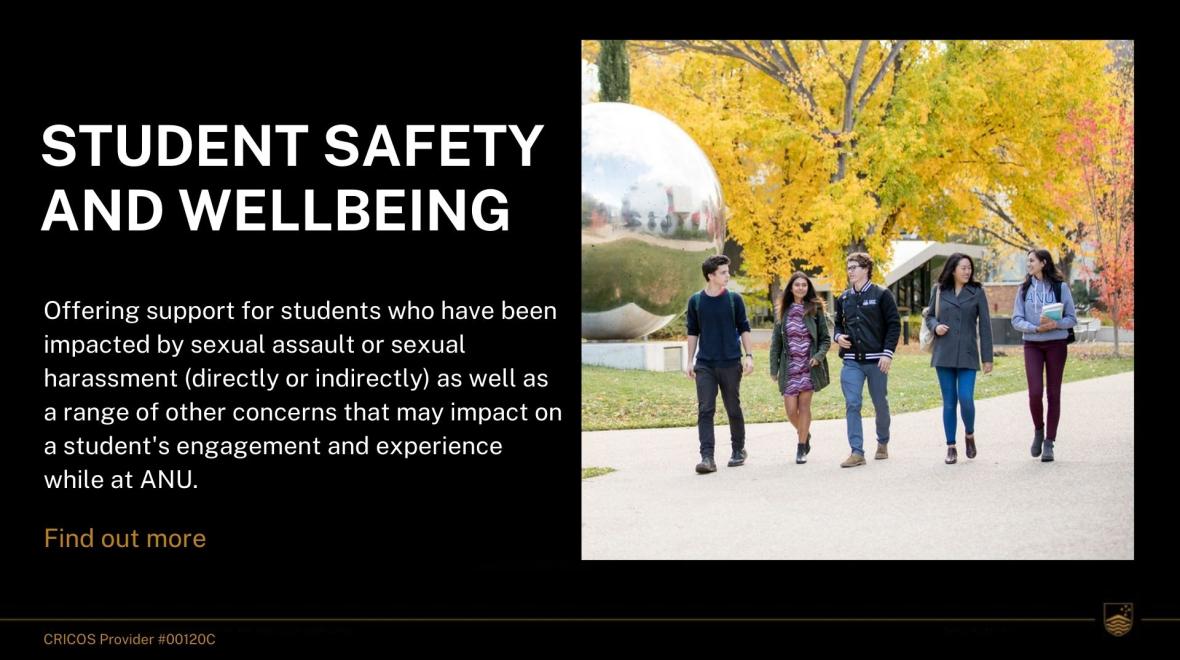
A Student Safety and Wellbeing Case Manager is available to discuss a range of concerns that impact your experience while at ANU.
ANU offers a variety of support options, including the ANU Counselling Services or ANU Student Safety and Wellbeing teams. Both services are free and confidential and provide person-centred and trauma informed services for currently enrolled students.
| ANU Counselling Services | ANU Student Safety and Wellbeing |
|---|---|
| - Non-diagnostic mental health service | - Case management services |
| - One - on one counselling support and group programs | - Connection with services at ANU and community |
| - No mental health plan needed | - Practical support for a number of issues that can impact on your student experience - Sexual misconduct and harmful behaviours response |
If you have not seen Counselling or the Student Safety and Wellbeing team before or you haven’t seen a Counsellor or Case Manager in the last 12 months, the first appointment will be a brief phone call to help the services understand your needs and work with you to support you access the most appropriate appointment with the most appropriate service.
Please select the option that describes you, if you are unsure you can call (02) 6125 2211 for assistance.
New Clients
If you are new to our service, or have not accesses our services in the last 12 months please complete our online registration form.
After completing the registration form, you will be contacted (phone or ANU email) by our Administration team to organise an appointment with the Service you have requested with. If you are unsure what service you need, don’t worry both Counselling and Student Safety and Wellbeing can organise a referral to the right service if required.
If you need to speak to someone while awaiting your appointment, you can contact the ANU Wellbeing and Support Line on 1300 050 327 or text 0488 884 170, available 24/7. You can also visit the Urgent support webpage for other support services available.
If you have any difficulties completing the form, or have not heard from our services after five working days from when you submitted the registration form, please contact our Administration team on 02 6125 2211 and select option 1.
How do I know if I am a new client, an existing client, or a third party?
- A new client is someone that has not seen ANU Counselling or SSWT before or has not had contact in the last 12 months.
- An existing client is someone who has connected with a Counsellor or Case Manager in the last 12 months.
- A third party is someone who with the student’s consent wants to facilitate a referral on behalf of a student.
When will I hear back from the support services team?
We will respond to your request within three working days. If you have any questions or have not heard from ANU Counselling Service or the Student Safety and Wellbeing team after three working days please contact (02) 6125 2211.
To read ANU Counselling Service or the Student Safety and Wellbeing team information on privacy and service delivery click here.
If you are seeking support or to make a disclosure following an incident of sexual assault or sexual harassment please complete the disclosure tool at Disclosure of Sexual Misconduct - ANU or contact the Student Safety and Wellbeing team at student.wellbeing@anu.edu.au
The Australian National University values the diversity of our student and staff community and wants everyone on our campus to feel included, safe and respected. We agree on a set of values that…
There are a wide range of services available across the university, the ACT, and nationally to support student mental health. These are a selection of services and resources most relevant to…

24/7 SUPPORTThe ANU Wellbeing and Support Line is a phone service for all current students who are experiencing situational stress, emotional difficulties and mental health concerns. The service can…

There are a range of services available at the University to support student wellbeing. On this page you will find descriptions of ANU service providers and their contact details. For 24/7 …

Looking for something else?If you need urgent support, please click hereThe University's holistic response to sexual assault and sexual harassment is divided into three areas.Education and…

We are committed to responding to and supporting members of the ANU community who have been impacted by sexual assault or sexual harassment. If you are in immediate danger, please call emergency…
The ANU is committed to equity and diversity, and creating an inclusive and welcoming environment for all students. Our campus is an inclusive and safe community for all. If you identify as…

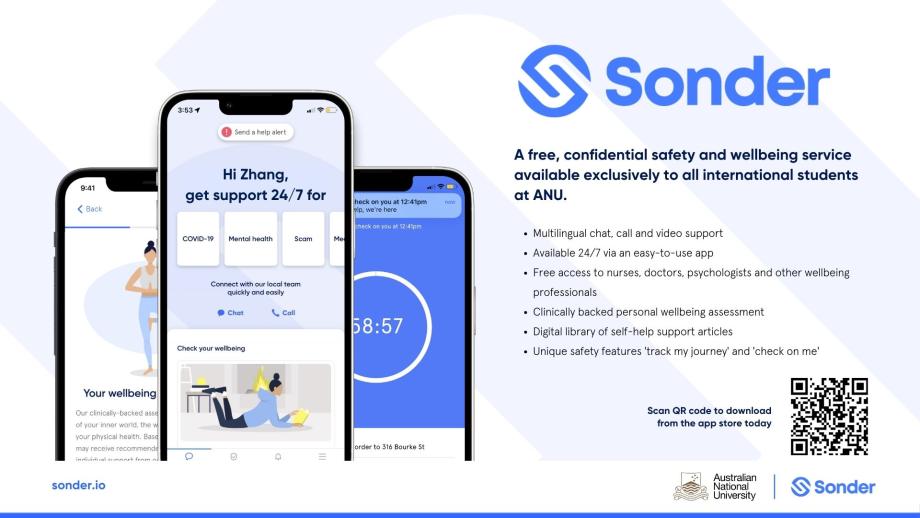
Sonder: A 24/7 personal wellbeing service that connects students with free, confidential, and immediate safety, medical and mental health care. Sonder is a smartphone app that can provide you with 24…